Tuesday, April 24, 2012

Evolution of an Infographic: What America Buys

So, I've re-entered the realm of making data look pretty and informative, after spending the past few years in the realm of video. The two things that have been pretty interesting:

1.) There's plenty of data out there, just never the kind of data set you want. Getting that data set takes a lot of phone calls and pestering people.

2.) There's a lot of thought that goes into the clear and good communication of information. And sometimes your favorite graphic will be cut.

That's what happened here.


We had ranked the left-hand column in order of size (with the exception of the amorphous category of 'other') and kept that order for the left column for easier comparison.

But I was a little worried that the changes of our spending would get lost in that comparison. The graphic would force people to read the individual numbers to compare the hierarchy of spending in 1949 and today.

So we tried to visualize the changes in spending in a Tuftean way, using his lesser known model of slopegraphs.

That was a little too minimalist and somewhat confusing. 

The combination of both approaches (and my personal favorite) is shown below: 


All in all, it took us two other, prettier and perhaps more confusing graphics to get back to our original one. We had a vote among colleagues and they voted for the very first bar chart.

Update: later the third version of the graphic became a very useful way to tell stories of change over time. My editor gave a different version of the same graphic-combo a greenlight, which now has become a regular data visualization we use.


Wednesday, April 18, 2012

Recent Work: Redistricting Explained

The GOP is changing the way the redistricting game is being played. Instead of using it to create additional Republican-controlled districts, they're concentrating on keeping the ones they already have.


Tuesday, April 17, 2012

Recent Work: Traders Navigate a Murky New World

Another day, another animation.

A dark pool is an electronic platform where investors trade shares privately, away from more transparent stock exchanges. What do they have to hide? Watch this animation to find out:


What's interesting about this story is that it's a very typical example of how complicated the financial rulebook has become for traders. And animation is a great way to show complicated matters.

Zach Wise has done a great job with it for the New York Times "Flipped" video project.

And then there was, of course, this great piece that was one of the first economic animations I've seen:


Saturday, April 7, 2012

Chinatown

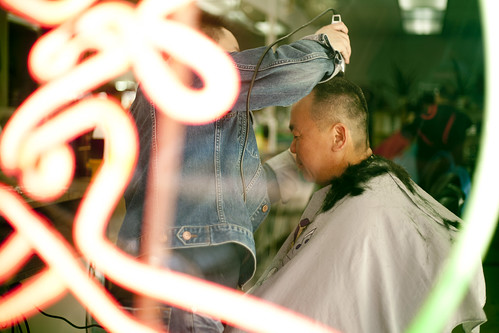
A few recent photographs from Chinatown. I've been busy crunching numbers for data visualization projects at work. But that only forces me to take my camera for a walk more often.
Chinatown
Chinatown Chinatown Chinatown

Unfamiliar ground: A few thoughts on international reporting


Shooting from a rooftop in Beijing
Reporting in unfamiliar terrain is exciting. It’s the reason many of us get into the business. But it’s also full of pitfalls for green reporters.
During my time at The Wall Street Journal, I had the good fortune of being sent to many countries and having the guidance of bureau chiefs in those countries. Here are a few words of advice they passed on to me.

WIDE-EYED REPORTING

One of the first things I had to learn when reporting abroad was that were are a lot of peculiarities in a city or village that looked like a story because I was new to the country. When you take your first stroll through a foreign place as a wide-eyed, curious kid, there seems to be a story around every corner. But, often, there isn’t. As any editor will tell you, a story needs to depict some change — a conflict. It needs to have a newshook. The same rules apply if you’re in a foreign country.
The goal is to avoid cliches and stereotypes. Abroad, you’re more prone to fall for them. It’s important to do sufficient research to build some background knowledge, to soak up previous reporting from local and international media about your proposed story, but more importantly, to make sure you constantly question some of your own biases.
One way to avoid that is to collaborate, not just hire a stringer or translator. (If you must, hire an interpreter, if possible, rather than a translator. There’s a difference, as one of my National Public Radio colleagues recently explained to me. A translator will most likely summarize what is being said, giving you little room to ask follow-up questions. An interpreter will be able to translate what is being said ‘live’, meaning as it’s being said). Try to work with a journalist who is based wherever you’re going, especially if you can bring something to the table that might help him or her, such as technical skills or contacts at larger international organizations.
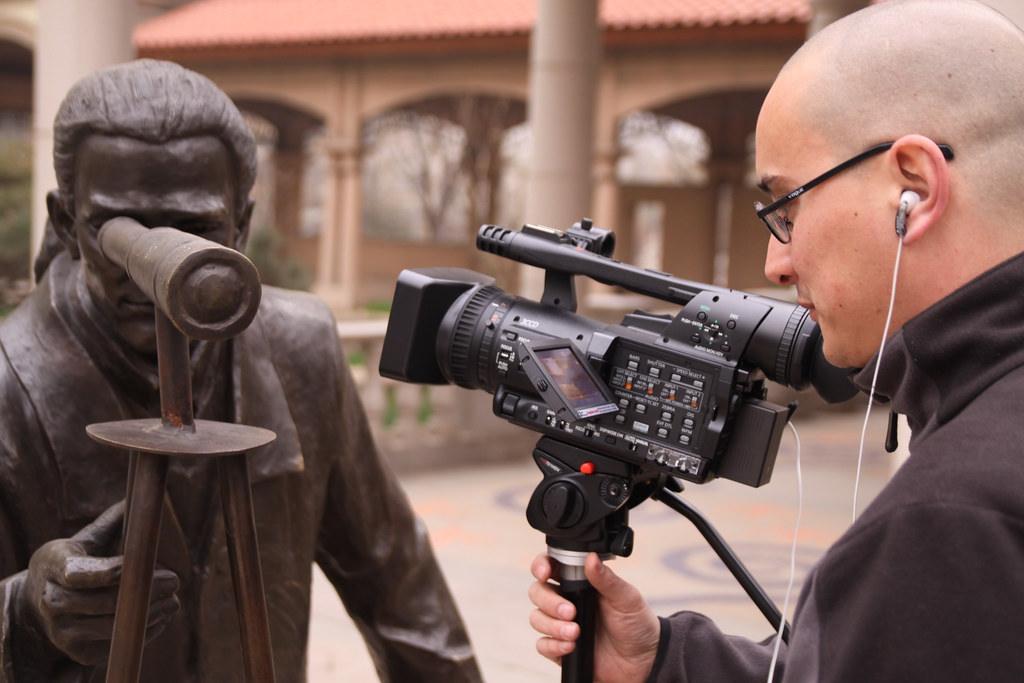
I was lucky enough to pair up with some excellent reporters, such as blogger and videographer extraordinaire Josh Chin (see below) who runs The Wall Street Journal’sChina Realtime blog, who helped me navigate Beijing’s real estate market and contributed video stories to our multimedia project.
Josh Chin at work

YOUR CONSCIENCE AS YOUR EDITOR

Reporting abroad for an American audience also requires that you and your editor be particularly careful about how you treat your sources.
The Bagehot’s Notebook columnist in the Economist makes a good point about a foreign reporter’s responsibility.
“One of the things you find out fast as a foreign correspondent, especially when reporting from the developing world, is that there is very little to stop from you making things up — except your own conscience. Out in a Chinese field, interviewing a peasant who has had his land stolen, or out in an Afghan refugee camp speaking to victims of Taliban brutality, it soon becomes obvious that if you embellish and improve quotes, nobody is going to find out. Chinese peasants and Afghan refugees are not going to read your work, and are not going to shop you to your editors.”
It might sound obvious, but here’s the gist: Don’t make things up. Don’t embellish or push a story if you discover it falls apart once you’re reporting on the ground. Don’t take short cuts because it’s harder to report in a foreign country.

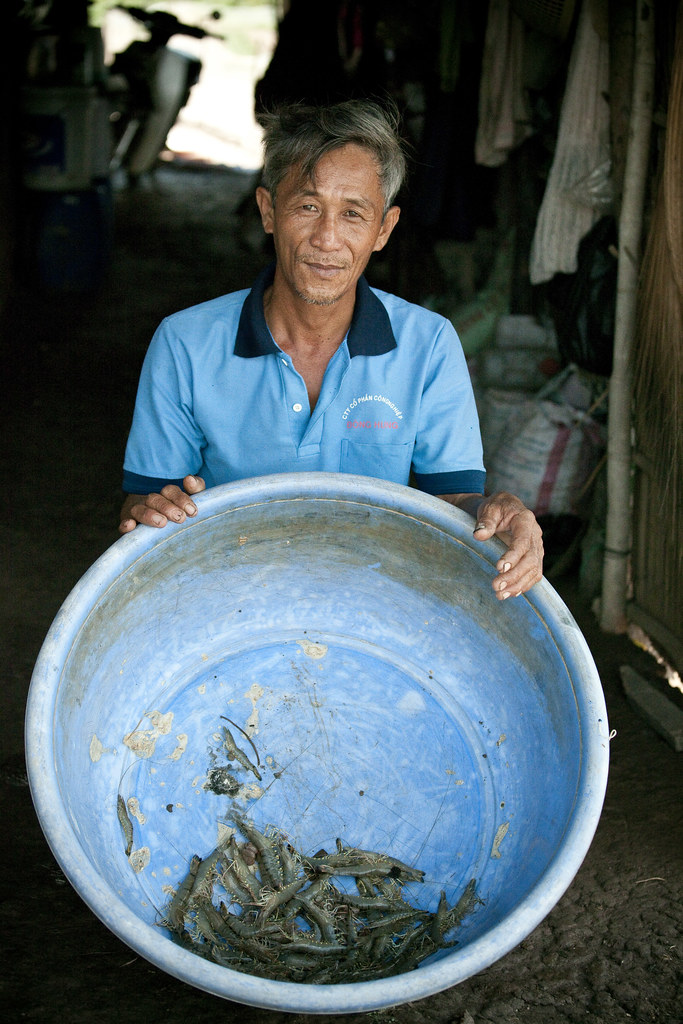
Shrimp farmer in the Mekong Delta
What’s just as important is that you make sure your sources — especially those in vulnerable, impoverished and often undereducated communities — completely understand the implications of speaking to you and being quoted in an article or shown in a photograph or video that will be distributed in the West. There are varying degrees to which people understand what they are opening themselves up to, and even if people light-heartedly agree to an interview, you want to do everything you can to make sure they understand your intentions, purposes and the possible consequences of their collaboration with you. There are governments that are harsher on their citizens for speaking to the media. It’s your responsibility to keep that in mind when your sources don’t.

THE WATCHFUL EYES OF INTERNATIONAL AUDIENCES

Nowadays, you’re writing for a global audience. Yes, that’s not news. But what might be a newer phenomenon is this: Your publication could be targeting new audiences abroad. That’s what The Wall Street Journal was doing while I was in Asia. The newspaper had a Chinese and a Japanese website, a Korean and a Hindi blog, and localized content for Hong Kong, Southeast Asia and India in English.
Iris Chyi, a researcher and assistant professor at the University of Texas at Austin, has been researching newspapers’ localized audiences. She sees localization of content as a key ingredient for the success of news organizations in the future.
“On the one hand, most newspapers should own their local niche (being hyperlocal),” she said in an email exchange. “But certain publications may expand beyond the geographic boundaries to seek online audiences at a higher geographic level.”
What that means is that you have an entirely new audience reading and viewing your stories. That also means you have a host of new fact checkers.
On some level, it also means that you will be kept on your toes — you’ll be serving a much wider audience than your community at home. More importantly, there’s added pressure to accurately portray the community abroad. They are watching now, too. And that is a good thing.

Saturday, March 10, 2012

Ethics of Data Journalism


And here's the latest blogpost from journalists.org

For the past three years, I’ve been a videographer through and through with only smaller excursions into the world of data visualization (although I never really stopped consuming them). The last time I worked on extensive graphics was eons ago in Internet terms — the distant year of 2008 when I was tinkering around with Adobe Illustrator to sketch out corn prices in an elaborate “charticle,” the crossbreed between a chart and article.
But I wanted to rekindle that passion of mine. I’ve recently started working more with infographics and wanted to educate myself. So I talked to two former colleagues who KNOW what they are doing and have spent the past few years in data journalism — from mapping data points, to finding stories in deluges of data, to making sure each is visually pleasing and clear.
What struck me about the conversations was that I was not given a long talk about the newest tools or the troves of data that governments and organizations have started pouring out in recent years. The points that really stuck were principles and ethics that surround non-linear storytelling and data literacy.

DATA IS NOT THE ANSWER; STORY IS

One of the main things that came up while chatting with my former Wall Street Journal journalist coder and now Columbia prof Susan McGregor is that data has become quite the buzzword recently. So much so that the New York Times declared this “The Age of Big Data”.
But what Susan cautioned me about was the need to go beyond finding ginormous data sets and do the same kind of reporting that any thorough and skeptical journalist would do: Find the story! It’s one thing to do “data-dumping” graphics, meaning graphics that visualize a set of statistics, but it’s another to actually find relations and stories within that data that tell you something interesting, surprising or new.
And beyond that, it’s also about finding the right kinds of data and looking outside what government departments provide. “Data are answers to an interview that someone else conducted,” Susan said.
Her statement was confirmed when I read The Guardian’s Facts Are Sacred: The Power of Data, a short e-book about some of the more recent projects the newspaper has done. One of the cases looks at its work during the London riots and illustrates just how much work went into requesting documents from the Ministry of Justice that detailed where convicted rioters came from. This data was paired with census information about the neighborhoods where these rioters lived, allowing for a glimpse into who they were.

DATA AS PART OF THE STORY

I also spoke to Albert Sun, a former colleague at the Wall Street Journal who just moved on to the New York Times (helping to create this excellent live platform for its Oscars coverage). He said that one of the interesting current issues journalists are dealing with is “how to integrate data more closely into other types of stories that are not grand interactive graphics set-pieces.”
There’s lots of potential “for putting data and multimedia inline,” he said. In other words: there have been many data-heavy infographics that are standalone pieces but there’s also an art to integrating what many news editors now define as “separate art” into the medium of text and have it flow within the story and interact with the written word.
This is an approach that the iPad long-form magazine Atavist is trying to take, as the magazine’s co-founder and creative director Jefferson Rabb explained during a Hacks/Hackers meeting in New York last week. The magazine is trying to integrate its multimedia and infographic elements as smoothly as possible to avoid having content feel like an interruption and, instead, make it part of the flow of the experience.

COME TO OUR FREE DATA JOURNALISM EVENT!

During a caffeine-fueled nerd session, Susan and I decided we should put on an event about data literacy. And so we are.
Please join us March 28 at the Columbia Journalism School for “Doing Data Journalism: It’s Not Just Numbers” as we host the Wall Street Journal’s technology editor and columnist Julia Angwin, ProPublica’s editor of news applications Scott Klein, the New York Times’ interactive news editor Aron Pilhofer and data journalist Maurice Tamman. It’s free!

Thursday, February 23, 2012

Lessons for Journalists from Independent Filmmakers


I’ve recently started looking into the world of independent documentary filmmaking in an effort to understand how so many filmmakers figured out a way to make a living with long-form storytelling. One thing is for sure: Most successful filmmakers I spoke to also are savvy business/sales people.
It was very interesting to get a glimpse into this world, mostly through the FilmShop and the Brooklyn Filmmakers Collective, two collectives I am part of. As a journalist, the divide between the ad sales department and the editorial side was as holy as anything could be. Here, filmmakers were writing proposals for grants, setting rates for their film screenings and speaker appearances, and working out ways to get funding from advocacy groups and corporations.
Here are a few things I think we could learn from our filmmaking colleagues.

GET YOUR REPORTING FUNDED

I have been speaking to a number of documentary filmmakers and video journalists, picking their brains about doing long-form journalism at a time when funding is scarce. A recurring theme is that some journalists and independent filmmakers (those worlds seem somewhat separate) produce shorter grant-funded pieces for journalistic publications and repurpose the footage later for 60- to 90-minute films.

This works for two reasons:
First, this approach allows filmmakers to explore subjects and cast characters for their documentaries while making shorter pieces for the faster-moving news cycle. It takes a long time and a lot of resources to find the right characters for a good documentary — people who are comfortable in front of the camera and have an interesting story you can follow, especially abroad. Doing this in stages and through shorter stories can be a cost-effective way to go scouting for your next long-form project and to gather enough material to cut together a trailer that, in turn, can help you apply for some of the more traditional grants that documentary filmmakers have relied on for decades.

Photo by Hilke Schellmann/Pulitzer Center on Crisis Reporting
Wall Street Journal videographer and filmmaker Hilke Schellmann has been working with her journalist partner Habiba Nosheen on an impressive documentary about honor killings in Pakistan. They have made four trips through the Pulitzer Center on Crisis Reporting, ITVS and the Center for Asian American Media, posting shorter stories such as this one on the Pulitzer Center’s home page, which were then picked up by The Atlantic and a large newspaper in the United Kingdom. They will release a documentary about the subject in the future (distributing it on television), but in the process of working on these stories, they already have created considerable awareness.
This brings me to my second point: This staggered approach to releasing stories during the actual production process is an opportunity to build awareness about a subject and to garner a small audience that then can grow into a larger one — a nice “side effect.”
With that said, here are a few funds that might be of interest (and you can find a long list of fellowships here):

BUILD YOUR AUDIENCE

In the past, many filmmakers might have spent years shooting in silence and editing their films behind closed doors, only releasing them during festivals, in theaters or on television for a few weeks. But the lead-up to the release/premiere of a film has become much more important — particularly when it comes to raising funds.
The biggest game-changer for documentary fundraising has been sites such asIndieGogo and Kickstarter, both of which allow filmmakers and managers of other creative projects to tap into their audience as investors. Filmmakers set a fundraising goal, which they need to meet in a certain number of days. They then try to raise that money through supporters of the film, friends, family and others who might stumble upon their project.
My friend, filmmaker Theresa Loong, has successfully raised more than $11,000 — $3,000 above her goal — for her film “Everyday is a Holiday” and has lectured on the subject multiple times. The key to these campaigns is building an audience before you even start your campaign, she said. That means reaching out through newsletters, hosted events where audiences are first exposed to a rough cut of your film or the subject matter, and making sure your site becomes a portal for the issues you’re reporting on.
Her film is about her father’s journey from being a prisoner of war during World War II to becoming an immigrant to the United States. It touches on a number of issues, such as the life of veterans, immigration and Asian Americans. To raise awareness within her target audience, before the film will even be shown on television, Loong held events at the Museum of Chinese Americans and festivals sponsored by Asian-American organizations.
Her presentation on Kickstarter can be found here.
This approach could be compared to building a niche audience for a blog and then connecting to it in a physical — not just virtual — space. News organizations such asProPublica or WNYC (Radiolab) have organized live events to bring their content to selected audiences. I think it’s an effort that’s worth pursuing. In a recent conversation, Loong called her film and the site she will create a “movement” — looking at stories (blog posts, events, screenings) that way might be an interesting approach to defining long-term projects.

DON’T GIVE UP

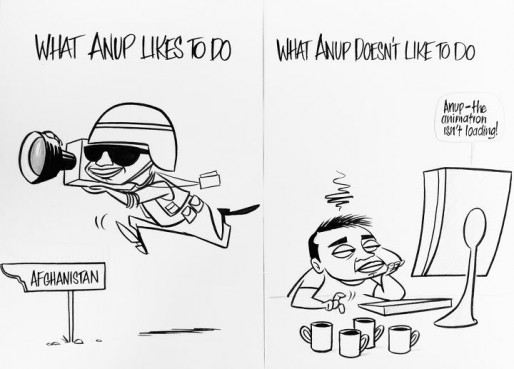
The numbers of inspiring examples abound. I look around me and see people like my friend and fellow Columbia graduate Anup Kaphle of The Washington Post. He has received funding from a number of organizations to tell some amazing stories fromAfghanistan even though his full-time job is more of an office job. Throughout the years, he has carved out a beat for himself in Afghanistan — not to mention the respect from his colleagues, as shown in this cartoon by Pulitzer Prize-winning animated cartoonist Ann Telnaes:

Cartoon by: Ann Telnaes. Courtesy: Anup Kaphle
Everyone has to find his or her own way to tell their stories. Sometimes that means reporting after office hours, when you’ve finished the assignments your editor gave you. Sometimes you make a deal with your editor to allow you to take a leave of absence for a reporting trip if you can find funding for it. Others might have to do work they don’t particularly enjoy in order to finance reporting trips they really care about. Whatever your arrangement will be, I firmly believe that there is a way for younger journalists like us to do the kinds of stories we’ve always wanted to do at a time when newspapers are hiring fewer people and closing foreign bureaus and regional newspapers, which used to serve as training grounds for aspiring reporters.
To quote Robert Krulwich’s commencement speech at Berkeley: These are dire times for journalism, “but there are some people who don’t wait.”